
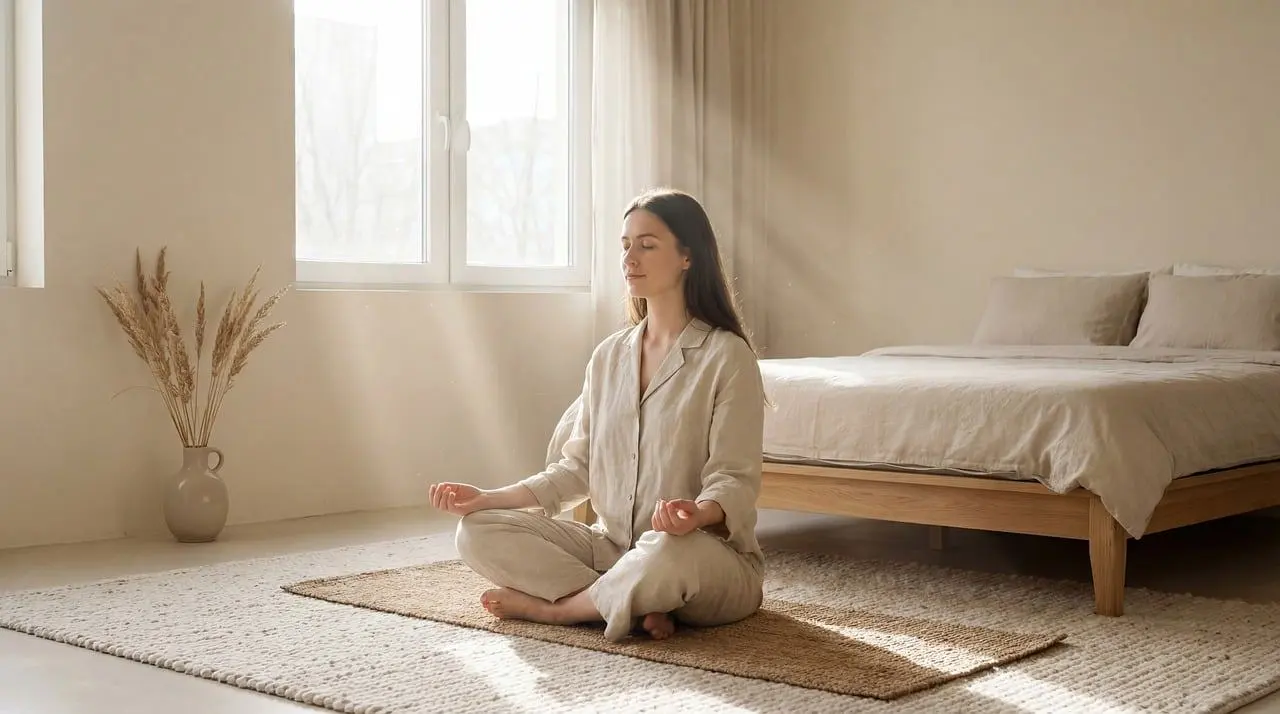
Feeling frazzled? Here’s how to reduce stress daily: pair steady habits like sleep, movement and connection with quick resets such as slow breathing or a brisk walk. Both calm your body’s stress response.
If you like practical, small-step ideas, the rest of our personal growth tips follow the same approach.
| Habit or tool | Value |
|---|---|
| Sleep | At least seven hours of sleep per day |
| Moderate-intensity exercise | 150 minutes per week |
| Quick walk when you feel triggered | A 10-minute walk |
| Slow breathing exercise | 10 very slow breaths in and out |
| Overhead stretch | Repeat three times |
| Positive thoughts to balance a negative one | Three positive things |
These figures come from Harvard Health’s article on reducing daily stress, published March 1, 2022. Guidance can change, so check the source before you rely on the figures.
Why does stress wear on your body?
Your body’s stress response is useful in a crisis. When you sense a threat, it releases stress hormones, tightens your muscles, raises your blood pressure and makes your heart and lungs work harder, according to Harvard Health.
The trouble starts when the alarm never switches off. Frequent stress can make the response constant and cause ongoing harm, including chronic inflammation, which sharply raises the risks for diseases such as dementia, heart disease and stroke (Harvard Health).
That is why daily habits matter more than a single fix. The March 1, 2022 Harvard Health piece works in two layers: a steady base you keep up every day, and quick resets for the moments you feel triggered.
Build the daily base: sleep, food, movement and people
Harvard Health names five pillars for coping with stress:
- Sleep: at least seven hours per day, as Harvard Health puts it.
- Food: a predominantly plant-based diet.
- Exercise: regular movement.
- Meditation: a regular practice of quiet attention.
- Connection: staying socially connected.
Dr. Shalu Ramchandani, an integrative medicine specialist at the Harvard-affiliated Benson-Henry Institute for Mind Body Medicine at Massachusetts General Hospital, says that practicing all of these makes you more resilient and better able to adapt to challenging situations (Harvard Health).
For movement, Harvard Health points to 150 minutes per week of moderate-intensity exercise, such as brisk walking, as important for every aspect of health, stress management included. If arthritis or another condition makes walking difficult, ask your doctor about other aerobic exercises you could do.
You don’t have to overhaul everything at once. Our guide on how to build good habits is a sensible next step if you want to add one pillar at a time.
Quick resets for when stress spikes
Daily habits lower your baseline, but you also need tools for the moment you feel triggered. The relaxation response, the opposite of the stress response, was defined by Harvard Medical School professor Herbert Benson, and it slows your breathing, reduces your heart rate and lowers your stress hormones (Harvard Health).
Three on-the-spot options to try:
- Breathe. Dr. Ramchandani recommends a basic exercise of 10 very slow breaths in and out (Harvard Health).
- Stretch. Sitting or standing, inhale, raise your arms overhead, lace your fingers together, stretch, release, then exhale as you lower your arms. Repeat three times, per Harvard Health.
- Walk. A quick 10-minute walk when you feel triggered can help “burn off” stress hormones, counter muscle tension and release feel-good chemicals (Harvard Health).
A mindfulness break works by bringing you to the present moment, which can break a cycle of stressful thoughts. Notice the warmth of a cup of tea in your hands, its scent and how it feels going down, or take a mindful shower or a leisurely walk through nature.
If you prefer imagery, picture your favorite vacation place, perhaps a beach, and imagine the sight and sound of the waves, the smell of the ocean and the breeze on your skin. Hold the image for a few minutes and notice the effect.
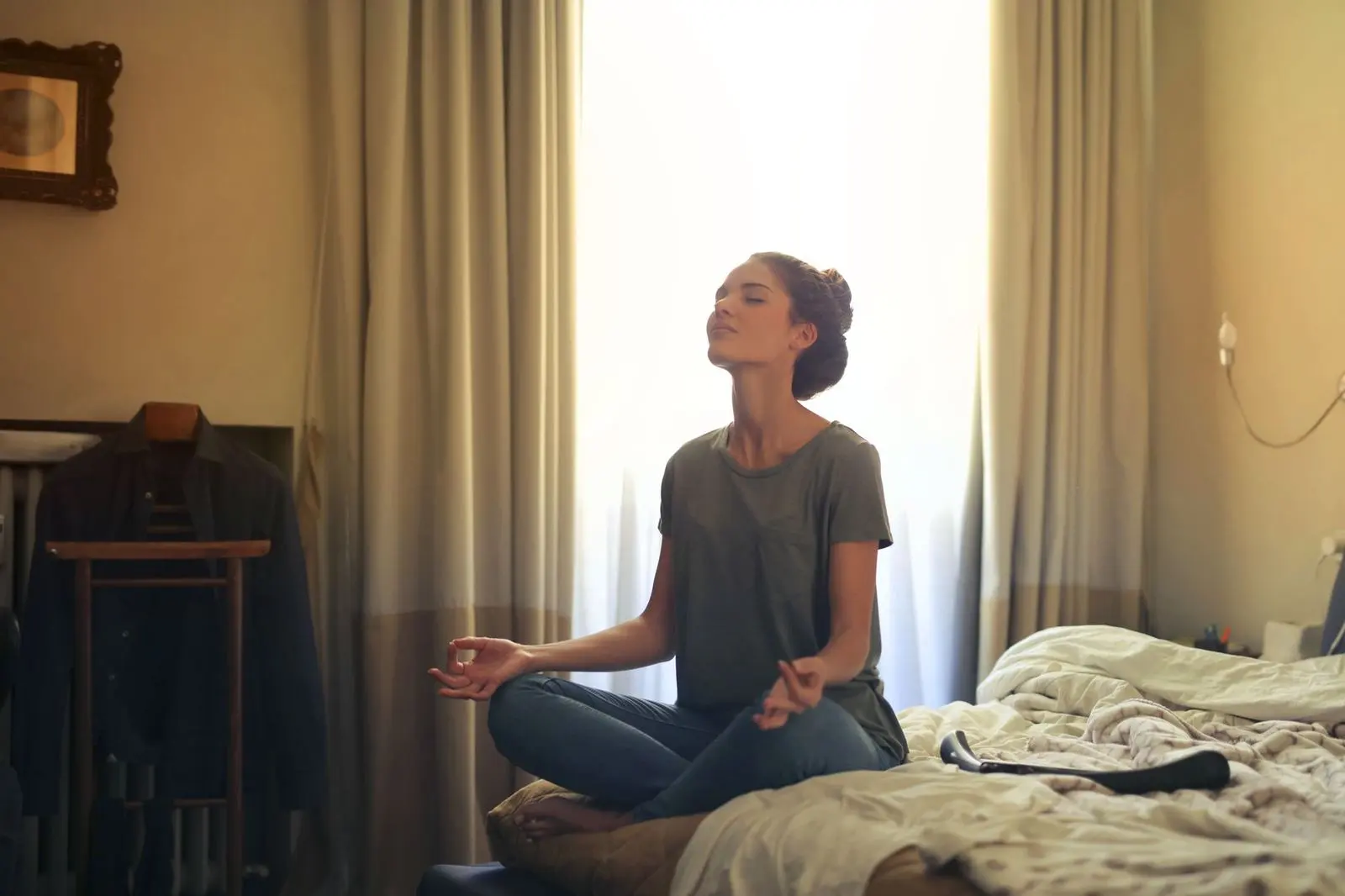
Use sound, laughter and your senses
Laughter has been called “internal jogging” by Dr. William Fry, and it may provide a source of healing. A favorite funny show counts as a genuine reset, not a guilty distraction.
Loud noise triggers the stress response and makes it hard to think. When it can’t be avoided, whether it comes from neighbors, traffic or someone at home or work, try earplugs or noise-canceling headphones.
Pleasing music can help bring on the relaxation response, but you need to be present and engaged in the sounds. If your mind is wandering to a stressful place, music won’t help, according to Harvard Health.
Calm your thoughts with kinder self-talk
Harvard Health suggests countering negative thoughts by finding three positive things for every negative or stressful one. Count your blessings: a safe place to live, a nice meal, heat for your home in cold weather (Harvard Health).
Self-criticism automatically activates the stress response, while praise and support help reduce it. Try phrases such as “You can do this” and “you’re doing the best you can.”
Kind self-talk also keeps you moving when routines feel hard. If follow-through is your sticking point, our piece on how to build self discipline pairs well with these habits.
Put it together in a routine you can keep
You don’t need every tip every day. Pick one base habit, such as protecting your sleep, and one reset you can use anywhere, then add more as they start to feel natural.
Match the tool to the moment:
- Tense shoulders at your desk: do the overhead stretch.
- Racing thoughts: take a mindfulness break with a warm drink.
- Noisy surroundings: reach for earplugs or headphones.
- Harsh inner critic: swap in supportive words.
- Feeling flat: put on something funny or soothing.
Harvard Health notes that handling stress gets harder for most people as the years go by, so the habits are worth building early (Harvard Health). This is general information, not medical advice; if stress feels unmanageable, talk with your doctor.
Frequently asked questions
What is the fastest way to calm down when I feel stressed?
Show answer
Slow breathing is the quickest place to start. It is the exercise Harvard Health’s expert recommends first for bringing on the relaxation response.
Do I need a gym routine to manage stress?
Show answer
No. Harvard Health’s example of moderate-intensity exercise is brisk walking, and if a condition such as arthritis makes that hard, it advises asking your doctor about other aerobic options.
Does sleep really affect stress?
Show answer
Sleep leads the coping list in Harvard Health’s guidance, which sets a floor of seven hours daily.
Can long-term stress harm my health?
Show answer
Yes. An always-on stress response can keep the immune system persistently activated, and Harvard Health links that with higher risks of dementia, heart disease and stroke.